How Reseller Fees Work Across Major Platforms in 2026
Whether you are flipping thrifted vintage streetwear on Depop, offloading pre-loved wardrobes on Vinted, or running a high-volume boutique on Poshmark, understanding your true net profit margin is essential. Each resale marketplace employs a distinct fee schedule that directly impacts how much cash lands in your bank account.
Platform Fee Comparison at a Glance
Before setting your listing prices, review the updated 2026 platform commission structures below:
| Marketplace | Seller Commission Fee | Payment Processing Fee | Who Pays Shipping? | Ideal Items to Sell |
|---|---|---|---|---|
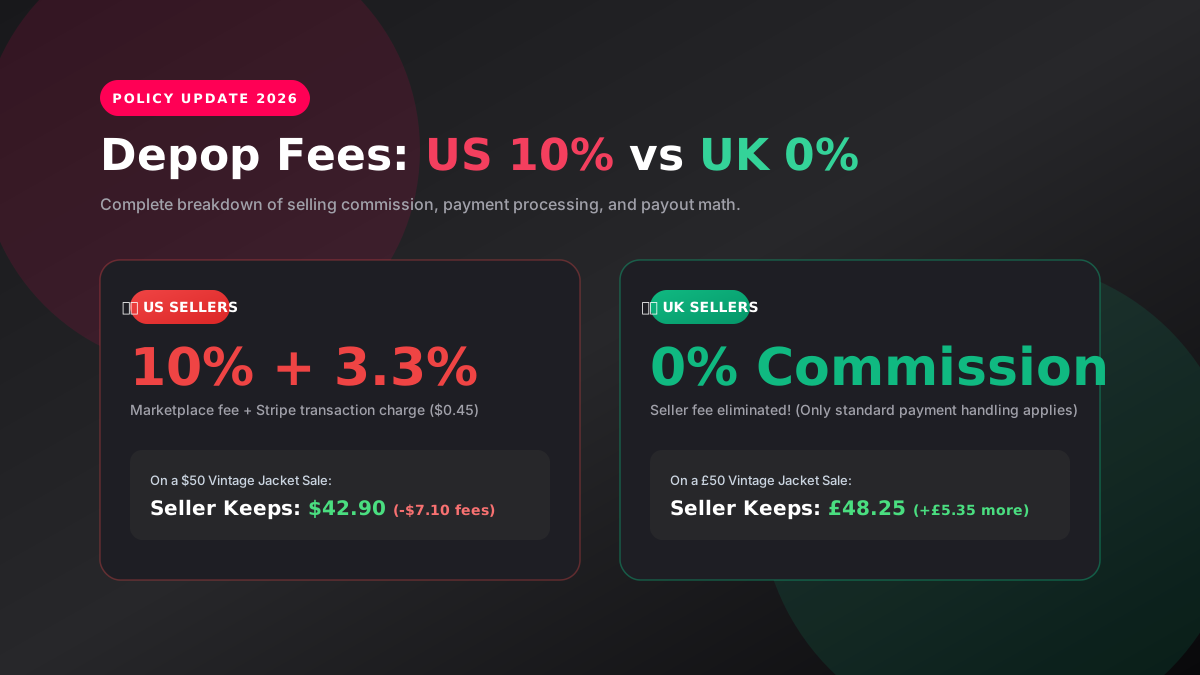
| Depop (US) | 10% of sale price | 3.3% + $0.45 per transaction | Buyer or Seller | Vintage, streetwear, Y2K fashion |
| Depop (UK) | 0% (Eliminated) | 2.9% + £0.30 transaction fee | Buyer or Seller | Trendy UK fashion & sneakers |
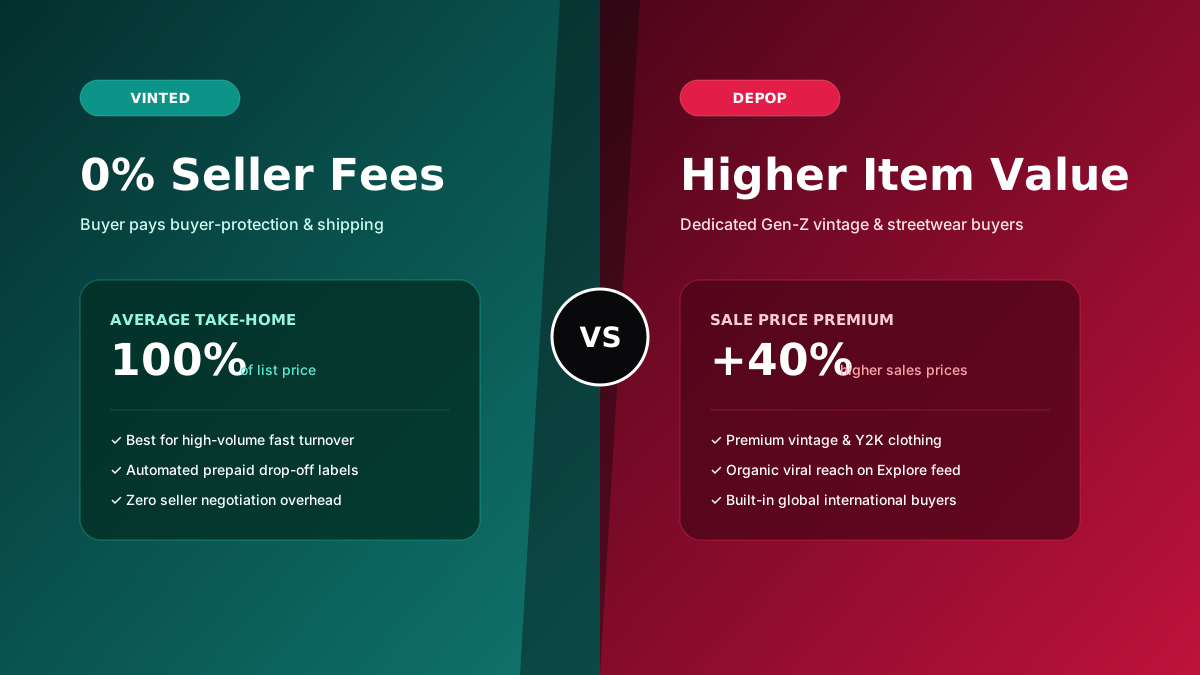
| Vinted (Global) | 0% for private sellers | $0.00 for sellers | Buyer pays (plus 5% + $0.70 protection) | Everyday high-street clothing & bundles |
| Poshmark | Flat $2.95 (under $15) or 20% ($15+) | Included in commission | Buyer (prepaid $7.97 label) | Mid-to-high tier designer brands |
| Mercari | 0% seller listing fee | $2 withdrawal fee (direct deposit) | Buyer or Seller | Collectibles, electronics, games |
Step-by-Step Profit Calculation Formula
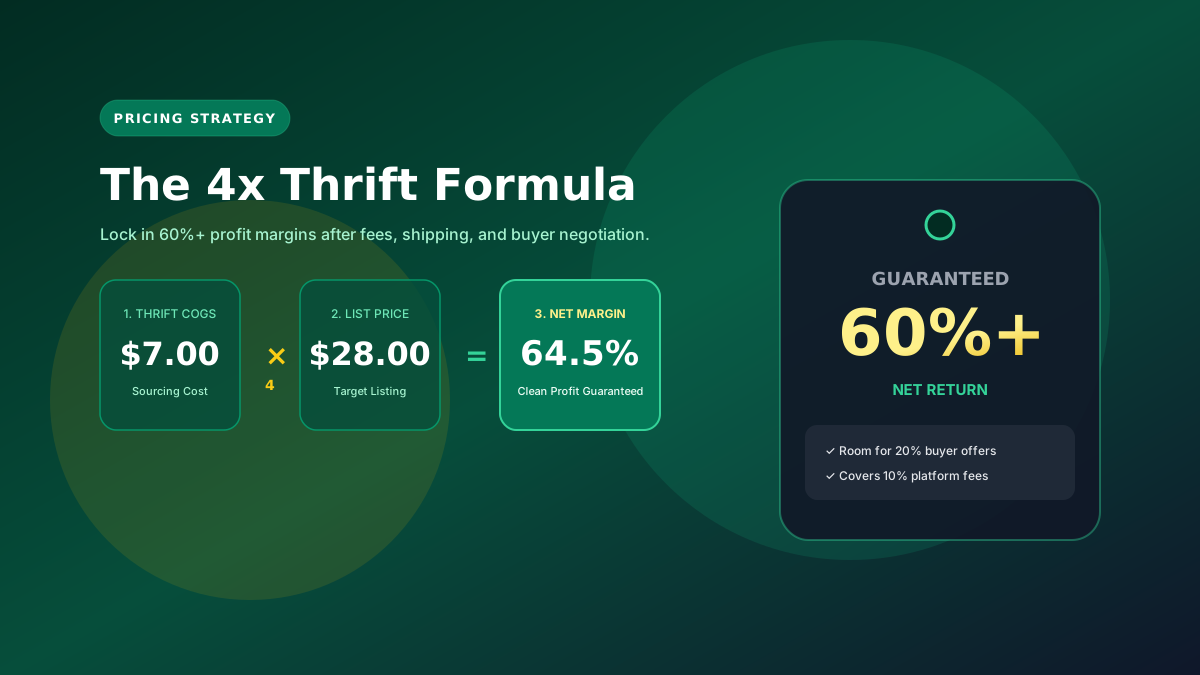
To determine whether an item is worth picking up at a thrift store or garage sale, use the standardized net profit formula built into our calculator:
Solved Real-World Example:
- You source a vintage Carhartt jacket at an estate sale for $15.00.
- You list and sell it on Depop US for $65.00 with the buyer paying standard $7.99 shipping.
- Depop takes a 10% selling fee:
$65.00 × 0.10 = $6.50. - Payment processing applies to the total order ($65 + $7.99 = $72.99):
($72.99 × 0.033) + $0.45 = $2.86. - Total platform deductions equal $9.36.
- Your net payout is $55.64. After subtracting your initial $15.00 purchase price, your pure cash profit is $40.64 (a 62.5% profit margin and a 271% ROI).
3 Proven Tips to Maximize Reseller Profit Margins
- Negotiate Sourcing Costs (Lower Your COGS): Your profit is determined the day you purchase inventory, not the day you sell it. Target thrift stores on 50% discount tag days or buy bulk wholesale liquidation lots.
- Cross-List Across Multiple Marketplaces: An item that sits unviewed on Poshmark might sell within 48 hours on Vinted or Depop. Because Vinted charges 0% seller fees, you can afford to accept slightly lower offers while keeping the same net payout.
- Be Cautious with Paid Listing Boosts: Depop’s 8% boosted listing fee cuts deeply into low-margin inventory. Only enable paid promotion on items with at least a 60% gross profit margin.
Frequently Asked Questions (FAQs)
Yes! Vinted operates on a buyer-funded model. Private sellers keep 100% of their final agreed listing price. The buyer pays a mandatory Buyer Protection Fee (5% of the item price plus a fixed $0.70 / £0.70 / €0.70 fee) at checkout.
In 2024, Depop dropped its standard 10% marketplace fee for all UK-based sellers to compete directly with Vinted. UK sellers now only pay standard payment processing fees (2.9% + £0.30), making it significantly more profitable to sell clothing in the United Kingdom.
While 20% sounds high compared to Depop or Vinted, Poshmark includes payment processing within that fee and simplifies shipping with a prepaid 5lb USPS Priority Mail label. For heavier items like coats or boots, Poshmark’s flat shipping often saves money compared to commercial carriers.
Full-time professional clothing resellers typically aim for a minimum of a 50% net profit margin and a 200%+ Return on Investment (ROI). This ensures you have adequate buffer room to absorb platform fees, packaging supplies, and occasional returns.